
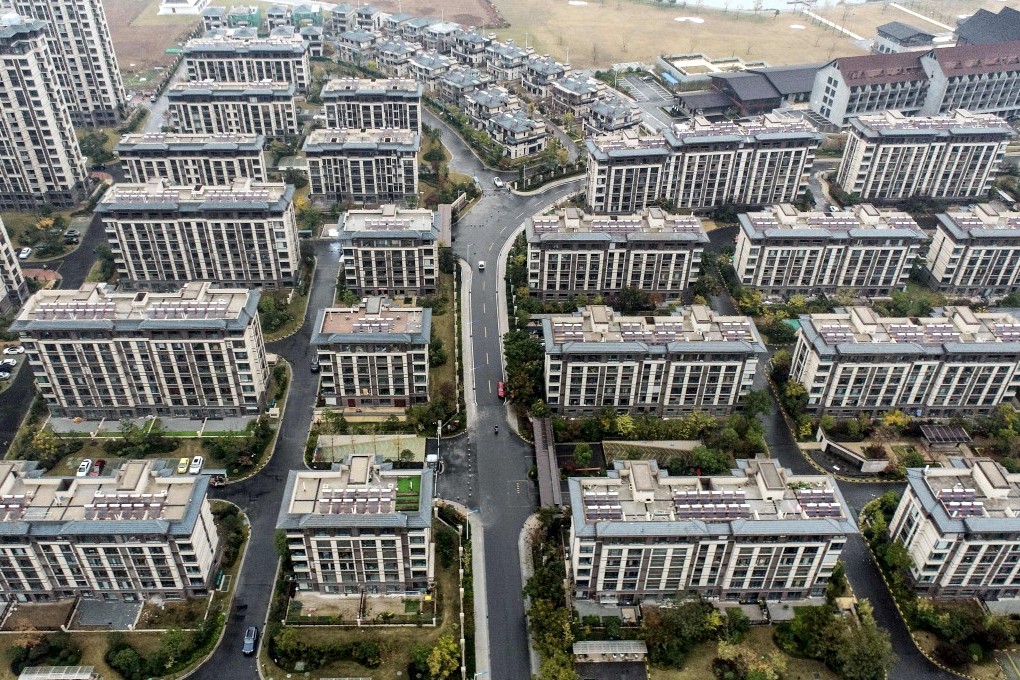
China's real estate sector is showing renewed signs of stress as the prolonged downturn enters its fifth year, with excess housing inventory continuing to weigh on prices and sales. The latest data indicates that the market has yet to find stability, despite scattered policy support and repeated government pledges to restore confidence.
Recent figures illustrate how deeply the slump has set in. Combined sales by the country's one hundred largest developers fell 36% in value in November compared with the same period last year, according to data released by China Real Estate Information Corp. Although the decline narrowed from October's steep 42% drop, the overall picture remains weak. For the first eleven months of 2025, nationwide sales were down 19% year on year.
Economists warn that the deterioration is difficult to ignore. Some analysts now believe the probability of additional support measures has increased, given the consistent decline in prices and sluggish buyer sentiment. A separate report from China Index Academy showed that resale home prices across one hundred surveyed cities fell nearly 8% in November, a slightly faster decline than the previous month. Researchers attributed the continued drop to large volumes of listings combined with a lack of confidence among potential buyers.
Major international banks have also noted the severity of the downturn. Estimates from one global institution suggested that sales among twenty-five leading developers dropped more than 40% in November from a year earlier. Analysts expect the weakness to continue through winter and possibly into early spring.
Concerns Over Liquidity and Developer Stability
China Vanke, once seen as among the country's more stable developers, recently requested bondholders' approval to delay repayment on one of its onshore bonds by a year. The move has heightened liquidity concerns across the broader sector. Investors were unsettled when Vanke's state-owned shareholder, Shenzhen Metro, announced plans to require collateral for outstanding unsecured loans totaling about 20 billion yuan. Bond prices dropped sharply, prompting trading halts in some cases.
Credit analysts argue that while Vanke's situation is serious, it does not necessarily signal an imminent wave of large-scale defaults. They emphasize that weaker companies have already been pushed out over the past several years, and that future government intervention is likely to focus on restructuring debt and ensuring that homes under construction are delivered, rather than providing broad-based bailouts.
Ratings agencies have taken a more cautious stance, with recent downgrades citing elevated restructuring risks. Several of Vanke's bonds continued to fall this week, underlining persistent investor anxiety.
Inventory Remains a Major Obstacle
One of the biggest constraints on recovery is the stock of completed but unsold apartments. Official data indicates that inventory reached approximately 762 million square meters by late August 2025, slightly higher than the level recorded at the end of 2024. This surplus poses a significant challenge to price stabilization and remains a priority for policymakers hoping to revive the market.
Last year, Beijing introduced a 300-billion-yuan program that allows state-owned enterprises to purchase completed but unsold housing to reduce inventory. However, the initiative had limited impact, and analysts say the scale of the problem requires more sustained measures.
Research from the Economist Intelligence Unit suggests that if authorities successfully tighten land supply and reduce developers' ability to start new projects, inventory could begin to fall more rapidly. Under this scenario, home prices might start to find a floor as early as the first half of 2027. The inventory turnover ratio, which measures how long it would take for current stock to be absorbed at average monthly sales levels, has shortened by five months since its peak but remains elevated.
At the current pace, analysts estimate it could take roughly another eighteen months for inventory to shrink to a healthier range, assuming demand remains stable.
Policy Options and the Road Ahead
Economists expect Beijing to adopt additional targeted measures to prevent the downturn from deepening. One option gaining traction is an interest rate subsidy that would lower borrowing costs for homebuyers without significantly impacting banks. Supporters argue that this could stabilize prices, jump-start demand, and give the broader market time to adjust.
Some analysts believe such a measure could help counter deflationary pressures next year. A reduction of one percentage point in average mortgage rates in the second quarter of 2026, for example, could lift new home sales and improve market sentiment.
Still, structural challenges remain. Weak sales have strained developers' cash flows, prompting banks to auction more foreclosed properties. Economists warn that this trend risks creating a negative feedback loop, in which falling prices lead to more financial distress, forcing additional listings and further depressing prices.
Despite isolated signs of improvement across broader sectors of China's economy, the property market remains a significant drag on growth. While policymakers have expressed determination to stabilize the industry, the timeline for a true recovery remains uncertain. For now, the evidence suggests that China's housing market is still searching for a bottom, with no clear turning point in sight.